
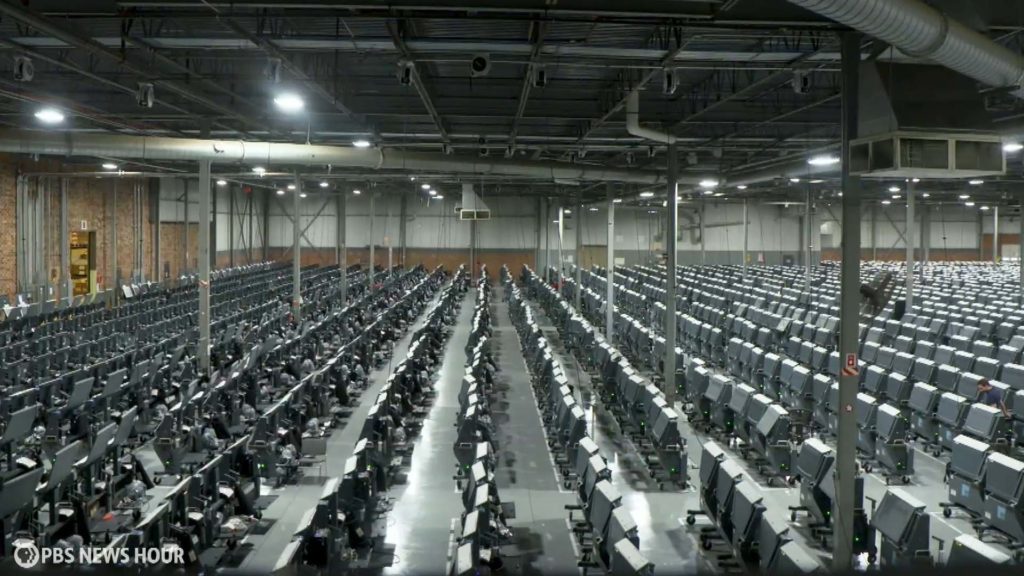
Election workers across Philadelphia are finalizing logistical preparations as early voting numbers surge ahead of November. More than 12 million ballots have already been cast nationwide, including over 65,000 in Philadelphia alone. Inside an election warehouse in Northeast Philadelphia, staff members are loading supplies into election activity boxes designed to supply the city's 1,700 precincts with poll books, rule manuals, posters, and pens.
Philadelphia's election administration is managed by a three-member board of commissioners composed of two Democrats and one Republican. Omar Sabir serves as chairman of the board, working alongside Democratic Commissioner Lisa Deeley and Republican Commissioner Seth Bluestein. Both Deeley and Bluestein emphasized that their administrative responsibilities remain strictly detached from political party allegiances.
"I would characterize the work that we do more as nonpartisan than bipartisan," Deeley said regarding the warehouse operations. "Quite honestly, our job is to be umpires, to call balls and strikes." Bluestein agreed, stating that running elections in Pennsylvania's largest city relies on civic standards rather than partisan interests. "Running elections in Philadelphia doesn't require democratic values or Republican values," Bluestein noted. "It requires American values."
White House Scrutiny and Historic Tensions
Philadelphia's voting framework has faced sharp criticism from President Donald Trump dating back to his 2016 campaign. Following the 2020 election, Trump criticized mail ballot counting in Pennsylvania, publicly describing Philadelphia and Detroit as corrupt political jurisdictions. The president raised questions again during the 2024 election, posting that massive cheating was taking place, though city authorities reported no substantive fraud complaints.
Since returning to the White House in January 2025, President Trump has continued urging federal authorities to intervene in state election processes, advocating for federal legislation to overhaul voting laws and raising doubts regarding mail-in voting. Earlier this month, the president posted on social media that vote tabulations in Philadelphia often take weeks to finish. Documented election fraud prosecutions in the city remain historically rare, with the largest past case involving roughly four dozen ballots.
Building Confidence Across Party Lines
The city's election commissioners noted that heightened rhetoric has created security challenges for election workers over the past several cycles. Deeley and Bluestein recalled receiving death threats and harassment during the 2020 count, which forced Bluestein to temporarily leave his home and stay in a hotel. Deeley maintained that mail-in voting procedures have extensive physical tracking, noting that election offices possess comprehensive verification records for all processed ballots.
Bluestein has focused on engaging directly with local Republican voters to reassure them about the transparency of the count. He explained that personal dialogue plays a central role in addressing skepticism when national party leadership expresses doubt about voting systems. "Part of my job is to help them have confidence in how our elections are run," Bluestein said. "It's about them having confidence in the work that we're doing so that they can say, you know what, I hear what the president is saying, but I know Seth."



0 Comments