Kino Casino’s Quartering Movie is finally dropping tonight!

Share

It’s happening!

After months of delays, “just a bit more editing,” and pure radio silence that had half the chat spiraling, the Quartering Movie is premiering tonight during the Kinoween stream at 8:30pm EST on Kick.

This isn’t just another segment. This is the big one. The project PPP and Warski have been grinding on for ages. Pouring their heart and soul into what could possibly be the biggest felting in history. This is the big one. The one they kept calling their most ambitious sh!t yet. The one that got pushed from early October all the way to Halloween because they refused to drop something half-finished.

And honestly? Dropping it on Halloween night feels perfect. The whole thing has that slightly unhinged, horror-comedy energy that fits the occasion way too well.

If you’ve been riding with Kino Casino through all the Jer segments, like the coffee grift arcs, the staff drama, The bull, the late-night crash-outs, the foot fetish and the Huck dilemma… this is the payoff. All that footage, all those bits, all the pure absurdity distilled into a movie. They’re hyping surprises, shocking moments, and the kind of vulgar energy the fanbase lives for.

No more waiting. No more “maybe next week.”

Tonight. 8:30pm EST.
kick.com/kinocasinogaming

Get in early, get the snacks ready, clear the schedule. This is the one we’ve been waiting on.

Don't miss this one. It’s going to be epic!


What is a Bucket Bunny?

Share

You’ve probably heard of groupies, puck bunnies, and buckle bunnies. But have you heard of a bucket bunny? It’s one of those hyper-specific internet terms that sounds almost cute until you find out what it actually means. And once you do, it opens a window into a whole online subculture most people never knew existed.

A “bucket bunny” is slang for a woman who actively pursues romantic or sexual relationships with electrical linemen, the utility workers who climb poles and repair power lines, often traveling across the country after major storms. The “bucket” refers to the elevated platform on the trucks these crews use. The term is almost always used as a pejorative, usually by the partners of those linemen, who call themselves “linewives.” In their eyes, a bucket bunny is someone drawn to the image, the overtime pay, or the temporary availability of men who are away from home for weeks at a time.

The phrase first exploded on TikTok in 2022 after Hurricane Ian hit Florida. Thousands of linemen poured into the state to restore power. At the same time, videos began circulating of women openly seeking out those crews on dating apps, and linewives responding with their own content.

Now, in 2026, the term is back in a big way. Once again, two competing narratives are colliding online. On one side, linewives are posting about the loneliness, the stress, and the constant fear of infidelity that comes with the job. On the other, other women are treating the arrival of storm crews almost like a temporary dating pool.

The comments sections get messy fast. Accusations fly. Memes fly faster. What started as niche workplace slang is once again becoming a full-blown internet talking point.

This isn’t a completely isolated phenomenon. Sports and high-travel jobs have produced similar slang for decades. There are buckle bunnies in rodeo culture, puck bunnies in hockey, and badge bunnies around law enforcement. What’s different here is how publicly and specifically the conflict plays out on TikTok. The linewife community has a strong online presence, and they use the platform both to bond with each other and to push back against what they see as disrespect. The result is pure internet entertainment.

Whether you find the term funny, messy, or a little sad, it’s a perfect snapshot of how specific online communities create their own language, and then watch that language escape into the wider world.

Recommended Related Watch: Atozy breaks down the madness that is the 2026 bucket bunny,


Australia's Digital Duty of Care: Online Safety or Another Step Towards Censorship?

Share

Labor says its latest internet laws will protect Australians. But the powers being handed to the eSafety Commissioner raise serious questions about free speech, privacy and government overreach.

The Albanese government wants to make the internet safer. At least, that's how it's selling its latest legislation.

The Online Safety Amendment (Digital Duty of Care) Bill 2026 promises to protect children, tackle online abuse and hold technology companies accountable.

Those sound like reasonable goals. Few Australians would object to stopping child exploitation, violent threats or the spread of intimate images without consent.

But buried beneath the promises of online safety is a major expansion of government regulation over digital platforms, including new investigative powers for the eSafety Commissioner.

The legislation passed the House of Representatives on 28 October and now faces the Senate.

Australians should be paying attention.

What exactly is the Digital Duty of Care?

The proposed law would require online services to identify potential risks and take appropriate steps to prevent serious harm before it happens.

It covers far more than Facebook or X. Online games, websites, messaging services, search engines and AI chatbots could all fall within its scope.

Here's a simple breakdown of the main rules:

Online platforms must prevent serious harm. Companies would need to assess risks and introduce safeguards against specified material and conduct, including child exploitation, violent threats, terrorism-related material and certain forms of harassment.

Stronger protections for under-18s. Platforms must address risks involving pornography, bullying, eating disorders, dangerous challenges and content promoting hostility towards women or gender equality. The House also added protections concerning AI chatbots encouraging emotional dependence in children.

More control over algorithms. Australians aged 16 and over would be able to choose a feed based on accounts they follow rather than algorithmically recommended content.

Faster complaint responses. Certain cyberbullying and adult cyber abuse complaints would require a response within 24 hours instead of 48.

Expanded eSafety powers. The regulator would gain additional investigative, information-gathering and enforcement powers, including the use of fictitious online identities.

Massive financial penalties. Providers breaching the core duty could face fines of up to $109.2 million.

Some of these proposals have obvious benefits. Giving people more control over algorithms, for example, is hardly an attack on free speech.

The trouble lies in how the broader powers might be interpreted and enforced.

Government Sock Puppet Accounts? Yes, They're in the Bill

One particularly controversial provision allows the eSafety Commissioner and approved researchers to operate what the legislation calls "sock puppet identities".

In plain English, these are fake online identities used to investigate and test digital services.

The eSafety Commissioner would be able to use fictitious accounts to observe platform behavior, test safeguards and generate lawful material, including with artificial intelligence.

Approved university researchers would also be permitted to use such accounts under specific conditions and ethical requirements.

Communications Minister Anika Wells argues the accounts are necessary to test whether technology companies are following the rules. For example, investigators could check whether an underage user can bypass a platform's age restrictions.

There is a legitimate purpose for that kind of testing.

However, the idea of a government regulator operating undercover accounts online deserves scrutiny, especially when the same regulator has substantial powers to investigate and penalize platforms.

What information will these accounts collect? How will their use be monitored? What safeguards will prevent the powers from being misused?

The bill requires eSafety to publish an annual statement about its sock puppet activities. That provides some transparency, but it does not eliminate concerns about oversight.

One claim circulating online also needs correcting. The bill does not ban ordinary Australians from having anonymous social media accounts. The sock puppet provisions authorize particular investigative activities. They do not introduce a general requirement for everyone else to obtain government permission to remain anonymous.

The genuine concern is the expansion of undercover regulatory powers, not an invented ban on anonymous users.

The Free Speech Problem

Perhaps the greatest concern is how the legislation deals with harmful content.

For adults, the bill specifies categories of serious harm, including threats of violence, sexual exploitation and certain criminal conduct.

For children, the definition is broader.

It includes material or conduct that may cause serious harm, with examples involving hostility towards women or gender equality, bullying and seriously harmful practices.

Preventing genuine abuse is one thing. Determining where legitimate disagreement ends and harmful expression begins is considerably more complicated.

Consider a heated political discussion about gender equality, social policy or cultural issues.

A strongly expressed opinion is not automatically harassment, hatred or a threat. Yet platforms operating under broad safety obligations may decide that removing controversial discussions is easier than defending them.

With penalties potentially reaching $109.2 million, companies have a powerful incentive to avoid regulatory trouble.

They do not necessarily need an explicit government order to remove lawful content. The threat of substantial financial consequences may encourage them to restrict material themselves.

That is how legitimate expression could be caught in the process, even when lawmakers insist censorship is not the intention.

The Australian Human Rights Commission has also warned that overly broad online safety rules risk restricting freedom of expression and access to information.

Those concerns deserve more than political assurances.

Does It Violate Freedom of Speech?

Australia does not have the equivalent of America's First Amendment.

The Australian Constitution contains an implied freedom of political communication, recognized by the High Court. It limits government power rather than providing an unrestricted personal right to say whatever one wishes.

Whether the Digital Duty of Care would breach that constitutional protection is a legal question that cannot be answered simply by calling the legislation censorship.

However, a law does not need to be declared unconstitutional to create problems for free expression.

If platforms begin restricting otherwise lawful political commentary because they fear regulatory penalties, Australians could experience less freedom to participate in public debate.

The government has included exemptions for professional news, artistic material, education and other public-interest content.

That is welcome, but it does not settle how ordinary users, independent commentators and smaller publishers will be treated when platforms make moderation decisions.

Freedom of expression should not depend on whether a technology company's moderation system considers an opinion worth the regulatory risk.

Is Labor on a Censorship Mission?

There is a reason critics are suspicious of the Albanese government's growing interest in policing online activity.

In 2024, Labor pursued its controversial misinformation and disinformation legislation, which would have given the Australian Communications and Media Authority additional oversight powers over digital platforms.

The proposal was abandoned after failing to secure enough Senate support.

The government also introduced Australia's under-16 social media restrictions, which came into effect in December 2025.

Now comes the Digital Duty of Care, extending regulation across a much broader range of internet services.

Each policy has its own stated purpose, but together they represent a significant expansion of government involvement in Australians' digital lives.

Labor denies the latest bill is designed to regulate political opinions or resurrect its failed misinformation legislation.

Importantly, the government also removed an earlier proposal that would have allowed the minister to add new categories of serious harm without passing another Act of Parliament.

That change addressed one of the strongest criticisms of the original draft.

Nevertheless, the bill still leaves considerable responsibility and discretion with the eSafety Commissioner and the companies expected to enforce these obligations.

The concern is not that Labor has already outlawed criticism of the government. It hasn't.

The concern is that successive governments are becoming increasingly comfortable with giving regulators greater influence over the rules governing online expression.

The more authority governments accumulate over the digital public square, the more important it becomes to question how that authority could be used by future governments.

Safety Shouldn't Come at the Cost of Free Speech

Children deserve protection from exploitation, predators and genuinely dangerous online activity.

Technology companies should face consequences when they knowingly ignore serious risks.

But those objectives do not justify giving regulators powers without clear limits, meaningful oversight and protections for lawful expression.

The Digital Duty of Care contains worthwhile measures. It also contains provisions that could encourage excessive content removal, place significant compliance burdens on online services and expand the government's ability to investigate the internet.

Australians should demand clear definitions of harm, stronger independent oversight of covert investigations, reliable appeal mechanisms and explicit protections for lawful political debate.

The Albanese government says it wants to make the internet safer.

It now needs to demonstrate that Australians will remain free to question, criticize, offend and disagree without their lawful opinions becoming casualties of its online safety agenda.

This fits a pattern. The same government previously pursued misinformation and disinformation laws that collapsed under free-speech objections. It introduced a social media age ban for under-16s. It has steadily expanded the eSafety Commissioner’s reach. Vague standards plus heavy penalties plus an empowered regulator produce a system in which platforms become the enforcement arm of government preferences. Content that challenges prevailing views is more likely to be restricted than content that aligns with them. That is not neutral safety regulation. It is a structural preference for control.

Parents already have tools and responsibilities for what their children see. Criminal law already covers genuine threats, child abuse material, and terrorism. A duty of care framed this way does not simply fill gaps. It transfers editorial power from individuals and companies to regulators and risk-averse compliance teams. The result is less open discussion, more pre-emptive removal, and greater government influence over what Australians can say and read online.

At the end of the day, the concern being raised by Australians online is simple. The government has a responsibility to protect people from real harm, but it has no business deciding what Australians can think, say or read simply because someone might find it offensive, or because the government doesn't like being criticized.


Sources

Scientists Finally Crack How Ancient Rome Made Its Mystery Color-Changing Glass

Share


British Museum researchers have solved a 1,600-year-old optical mystery by figuring out how Roman artisans manufactured the legendary Lycurgus Cup. The fourth-century cage cup looks jade green in normal daylight, but shifts to a glowing blood red the moment a light source is placed behind it.

For decades, material scientists argued over whether the color change was an intentional chemical feat or an accidental contamination during manufacturing. Detailed microscopic analysis confirms the glass contains precise nanoparticle proportions of silver and gold embedded in the silica structure.

Why the Ancient Technique Baffled Experts

Making the cup required an extraordinary level of chemical precision that modern glassmakers struggle to replicate. Artisans had to infuse molten glass with tiny metallic particles measuring roughly 50 nanometers across.

If the metal ratio drifted by even a fraction of a percent, the batch ruined completely. The microscopic silver and gold particles scatter blue light while absorbing other wavelengths, creating the dual-color illusion depending on the angle of illumination.

Replicating the Roman Formula Today

Researchers successfully recreated the optical effect using modern high-temperature furnaces and precise elemental dosing. The process matches advanced nanotechnology techniques used in modern photonics today, long before industrial chemistry existed.

The physical artifact remains on display in London as proof that ancient craftsmen mastered complex physics centuries ahead of schedule. Conservation teams plan to publish the exact particle ratios next month.


The Glacier App Drama: Candace Owens vs Leah Files

Share


Alright, so if you've been seeing Candace Owens, some researcher named Leah, Shawn Ryan, and this app called Glacier all mixed up in the same drama on X the last few days, here's the full breakdown of what actually went down.

Leah, who goes by theleahfiles online, runs a Substack where she does long research pieces. She presents herself as having about 20 years of background in intelligence and DoD work, plus corporate intelligence stuff looking into fraud and financial trails. On July 27 this year she taped an episode for the Shawn Ryan Show. Shawn Ryan is the former Navy SEAL and CIA contractor who hosts a big podcast. According to Leah, right before they started filming she was told she could not name certain people connected to funding surveillance technology. She has pointed specifically to names like Peter Thiel.

Shawn Ryan did not release that episode at the time. On October 19 he put out the full unedited interview himself. His statement said he had serious concerns about the truthfulness of some of her statements and decided not to air it originally, but he was releasing the raw footage so people could judge for themselves. He also noted that his investments are public on his LinkedIn and that he backs companies like Anduril and Shield AI because he believes in the tech for the American warfighter.

The next day, October 20, Leah dropped a Substack piece titled "Glacier: The Privacy App With a Past It Erased." Glacier is a consumer privacy app that offers a VPN, DNS protection, and disposable burner phone numbers. It costs about $14.99 a month plus extra for the numbers. Shawn Ryan is listed as a co-founder and has heavily promoted it on his show. Leah's piece walks through company records, old archived pages, and policy language. Her main points:

The privacy policy changed shortly after the app started charging customers. Early language said no logs were stored. Later versions said the company keeps the numbers you call, the numbers that call you, the duration, and the audio of voicemails, all tied to your account.

The burner numbers are actually Twilio lines with Glacier's name on them. Twilio has a track record of complying with a high percentage of government data requests.

The company behind the tech has roots in a government contractor setup. Older materials referenced a location near Fort Meade and NSA. Some of that history appears to have been cleaned up on public pages before the consumer app launch. The CTO has an NSA engineering background according to the research.

She also noted that Shawn Ryan's co-founder status was confirmed in a press release but not always disclosed clearly in every episode promotion.

Around October 22 Candace Owens' show ran a Glacier sponsorship ad. People noticed the timing and started asking questions. Candace pushed back hard. She defended reading the ad, said Leah's research had clear errors, and accused her of misrepresenting a private DM conversation they had. Candace said Leah flew off the handle when questioned about details, called her an AI bot and an idiot in a late-night X space, and was spinning a narrative about the shelved interview. Candace also brought up Leah's background in tournament poker, framing it as relevant to credibility.

Leah responded that poker is just a hobby with no real cash value outside of events, defended the accuracy of her Glacier piece with sources, and pointed out that Shawn Ryan has other sponsors and investments that connect back to the same circles she was restricted from naming, including Polymarket which has ties to Peter Thiel. She maintained that the interview restrictions and the later release of the footage fit a pattern of protecting those interests.

Shawn Ryan has stayed mostly on the side of releasing the full interview and standing by his public investment disclosures. The whole thing has been playing out across Substack, X posts, Spaces, and other shows, with people arguing over whether the privacy policy change is a big deal, how much the contractor history matters for a consumer app, and whether the interview drama was about accuracy or about protecting business interests.

That is the complete chain as it sits right now. Leah published the critique of the app. Candace defended promoting it and went after Leah's methods and background. Shawn Ryan released the raw interview and restated his reasons for the original decision. Everyone has their documents and screenshots out. The arguments are public.

Who is Tamara Joseph? The Woman in the Spotlight of the Ethan Klein Affair

Share


When Hila Klein posted that her husband Ethan had been having an affair for more than six months, she left one major blank. She never said who the other person was. That blank did not stay empty for long. Within hours, one name started dominating timelines, comment sections, and group chats across the H3 community.

Tamara Joseph.

She is the 27-year-old animator who joined the H3 Podcast as an intern last year, better known online as Undead Mummy. Right now she sits at the center of the biggest scandal the show has ever faced, even though neither Hila nor Ethan has publicly confirmed her involvement. Here is everything that is known so far, and why so many people have locked onto her name.

Her background

Tamara Joseph was born on October 13, 1999. She is British, Jewish, and holds a Bachelor of Science in Neuroscience from The Ohio State University. While she was still a student, she was already making experimental short films under the name Undead Mummy. In 2021, Ohio State’s student newspaper The Lantern profiled her work, describing how she turns random phrases into strange, mixed-media pieces that blend stop-motion, 3D animation, puppetry, and live action.

She is largely self-taught. Her style is dark, abstract, and often unsettling. Before she ever appeared on H3, she had already built a small but dedicated following for that exact brand of weird.

How she ended up at H3

In 2023 she released two claymation videos called “Dark Nathaniel Klansman.” They featured exaggerated, nightmarish versions of Ethan Klein and Oliver Tree and quickly became a cult favorite among H3 fans. According to comments she later made on the podcast, she met Oliver Tree while visiting family in London. She asked if he had seen the videos. Her mother then asked Tree to tell Ethan to follow her on Instagram. The next day, he did.

That connection eventually led to a job. In May 2025 she joined the H3 Podcast as an intern. She was first introduced to the audience on H3 Show #151 on May 23, 2025. From that point on she worked behind the scenes as the show’s animator, occasionally appearing on camera and running her own streams on the side.

The timeline that matters

Hila said the affair lasted more than six months. That places the start somewhere around April 2026 or earlier. Tamara had already been on staff for nearly a year by then. The overlap is complete.

After Hila’s Instagram post on October 23, several things happened in quick succession:

  • Tamara was absent from the most recent episode of the podcast.
  • Multiple longtime crew members, including AB, Lena, Dan, and Harley, unfollowed her on Instagram.
  • She did not share or interact with Hila’s statement the way the rest of the crew did.
  • She has remained completely silent since the story broke.

Those are the concrete observations that turned a general “who was it?” conversation into a very specific one.

Why the internet zeroed in on her

People did not invent the connection out of thin air. The combination of factors is hard to ignore:

She is the only relatively new, significantly younger woman on the current staff.
She was present for the entire period Hila described.
The sudden social media distancing by multiple crew members is not normal coworker behavior.
Her complete silence stands out against the rest of the team’s public support for Hila.

Add in older clips that some fans now view differently, and the working theory writes itself. That does not make it proven. It does make it the strongest circumstantial case currently available.

What is still missing

There is still no direct public evidence. No messages. No photos. No video. No admission from Ethan, Tamara, or Hila. The crew’s statement cutting ties with Ethan also avoided naming anyone. Until one of the people who actually know the truth decides to speak, everything beyond the behavioral pattern remains inference.

Where things stand

Tamara Joseph is a real person with a documented creative career that existed long before she ever walked into the H3 studio. She made strange, memorable animation, got noticed by Oliver Tree, got hired, and is now the main subject of a very public rumor that has taken over the conversation.

The links are real and reasonable. The confirmed proof is not. Right now the story sits in that uncomfortable middle space where a lot of people have already made up their minds, but the people who know the full truth have chosen not to fill in the blank.

Ethan Klein Cheated on Hila. Now the H3 Podcast Is Done for Now.

Share


Ethan and Hila Klein have been one of those couples who felt almost inseparable from their brand. They met in 2007, got married in 2012, built h3h3Productions together, launched the H3 Podcast, started Teddy Fresh, and raised three kids while living a very public version of their lives. For years fans watched them bicker, laugh, and work side by side. It felt like they were in it for the long haul.

That picture cracked open this week.

On Thursday, Ethan posted that the H3 Podcast was going on an indefinite hiatus. A few hours later Hila went on Instagram and laid out what she said had been happening behind the scenes. She wrote that her husband had been having an affair for more than six months. According to her, she had sensed something was off for a while. She asked questions and shared how she was feeling. He brushed her off. She said she started doubting her own instincts because she loved him and wanted to trust him.

Then he got caught in a lie. The story shifted. First it was just a kiss. Then it was emotional cheating. After she kept pushing, she says he finally admitted the affair had been going on for over half a year. She added that she still does not know the full extent of it.

Hila described the whole thing as living in a nightmare she cannot wake up from. She talked about the betrayal feeling immeasurable after nearly twenty years together. He had been her partner in marriage, parenting, and business. Now she is trying to figure out separation and co-parenting while taking care of herself and their children one day at a time. She ended the post with a message to anyone who might be in a similar spot: trust your gut. If you are not being treated right, leave.


The response from the people who actually make the show was quick and blunt. The H3 Podcast crew posted that they were shocked, angry, and heartbroken. They said they unanimously agreed they would not continue working with Ethan or let him profit from the show in any way. They made it clear they stand with Hila. The future of the podcast is up in the air. No one seems to know what comes next.

Ethan has not publicly addressed the specific claims about the affair. He did ask people to respect his family’s privacy and not contact them looking for comments. The whole situation is still very fresh. As of right now the only detailed account has come from Hila.

For a couple who spent more than a decade building everything in public, this is a private mess that just went very public. The podcast that was their main stage is paused. The crew that helped run it has stepped away from Ethan. And the two people at the center of it all are trying to navigate the end of a marriage that defined a big part of internet culture for a long time.

It is messy. It is sad. And it is still unfolding.


Survey Finds 45 Percent of Students Justify Violence for Hate Speech

Share
Cornerstone University President Raises Concerns After Survey Finds 45 Percent of Students Justify Violence for Hate Speech

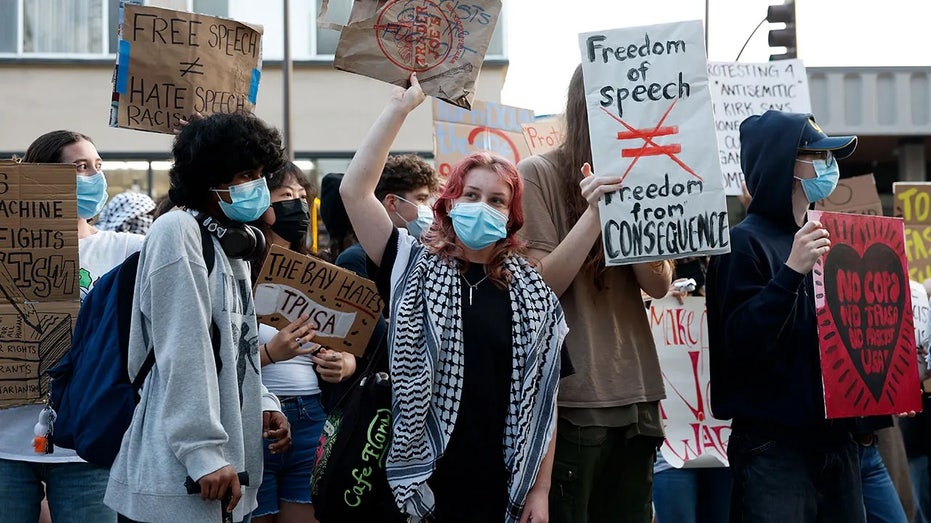
A new survey from the Buckley Institute finds that 45 percent of American undergraduate students believe physical violence can sometimes be justified to stop speech they consider hate speech. The 2026 National Undergraduate Student Survey, released this month, has sparked fresh discussion about free speech and campus culture.

The Buckley Institute announced the release of its 2026 National Undergraduate Student Survey on October 8, 2026.. The survey itself was conducted September 5–14, 2026.

Cornerstone University President Gerson Moreno-Riaño responded to the results by arguing that many universities have drifted from their core purpose. In comments to media outlets, he said higher education is increasingly producing students who leave campus angry, entitled, and inclined toward violence. Instead of teaching open debate and careful inquiry, he contended, too many institutions are turning out socialists and Marxists.

The survey, conducted by Inquire LLC among 803 full-time undergraduates under age 25 at four-year colleges, also recorded high levels of support for other forms of speech restriction. Forty-six percent said it is sometimes acceptable to shout down or disrupt campus speakers. Forty percent agreed that offensive speech should be subject to criminal prosecution. At the same time, a record 66 percent acknowledged that hate speech remains protected under the First Amendment.

The findings highlight a clear divide in how younger adults weigh free expression against claims of harm. Free speech advocates see the numbers as evidence of a dangerous erosion of civil norms. Others maintain that students are reacting to real experiences of hostility and discrimination.

University leaders now face renewed questions about codes of conduct and the balance between safety and open inquiry. Academic freedom groups warn that accepting violence as a response to words undermines the basic work of higher education.

The Buckley Institute data arrives amid ongoing state-level debates over viewpoint diversity and ideological requirements on campus. Figures such as Moreno-Riaño argue that deeper structural and cultural changes are needed if universities are to recover their traditional role of fostering rigorous, open-minded discussion.


Philadelphia Election Officials Prepare For Midterms Amid Scrutiny From President Trump

Share
Philadelphia Election Officials Prepare For Midterms Amid Scrutiny From President Trump

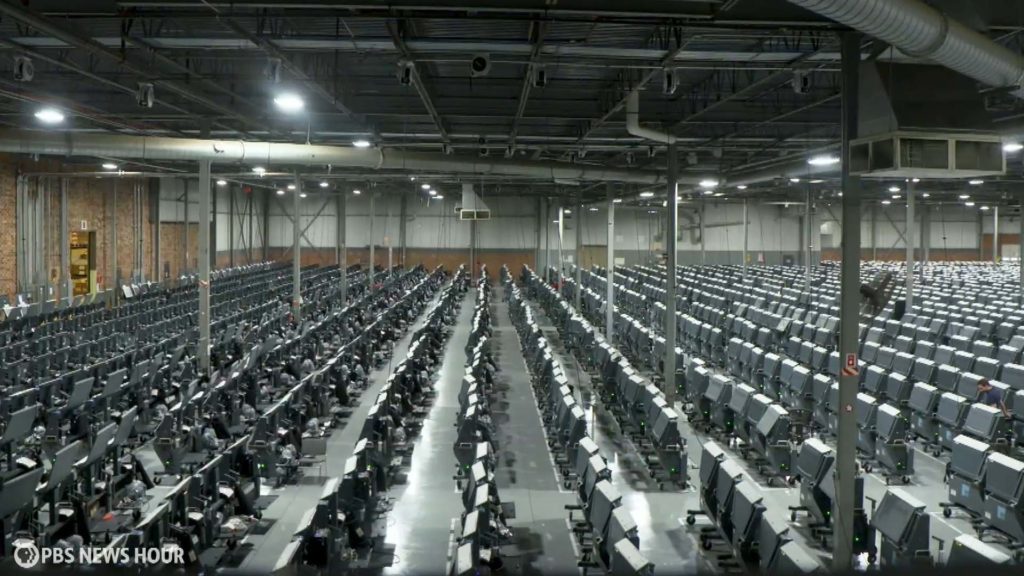
Election workers across Philadelphia are finalizing logistical preparations as early voting numbers surge ahead of November. More than 12 million ballots have already been cast nationwide, including over 65,000 in Philadelphia alone. Inside an election warehouse in Northeast Philadelphia, staff members are loading supplies into election activity boxes designed to supply the city's 1,700 precincts with poll books, rule manuals, posters, and pens.

Philadelphia's election administration is managed by a three-member board of commissioners composed of two Democrats and one Republican. Omar Sabir serves as chairman of the board, working alongside Democratic Commissioner Lisa Deeley and Republican Commissioner Seth Bluestein. Both Deeley and Bluestein emphasized that their administrative responsibilities remain strictly detached from political party allegiances.

"I would characterize the work that we do more as nonpartisan than bipartisan," Deeley said regarding the warehouse operations. "Quite honestly, our job is to be umpires, to call balls and strikes." Bluestein agreed, stating that running elections in Pennsylvania's largest city relies on civic standards rather than partisan interests. "Running elections in Philadelphia doesn't require democratic values or Republican values," Bluestein noted. "It requires American values."

President Donald Trump has repeatedly called for federal overhauls to state election and mail-in voting procedures.

White House Scrutiny and Historic Tensions

Philadelphia's voting framework has faced sharp criticism from President Donald Trump dating back to his 2016 campaign. Following the 2020 election, Trump criticized mail ballot counting in Pennsylvania, publicly describing Philadelphia and Detroit as corrupt political jurisdictions. The president raised questions again during the 2024 election, posting that massive cheating was taking place, though city authorities reported no substantive fraud complaints.

Since returning to the White House in January 2025, President Trump has continued urging federal authorities to intervene in state election processes, advocating for federal legislation to overhaul voting laws and raising doubts regarding mail-in voting. Earlier this month, the president posted on social media that vote tabulations in Philadelphia often take weeks to finish. Documented election fraud prosecutions in the city remain historically rare, with the largest past case involving roughly four dozen ballots.

Building Confidence Across Party Lines

The city's election commissioners noted that heightened rhetoric has created security challenges for election workers over the past several cycles. Deeley and Bluestein recalled receiving death threats and harassment during the 2020 count, which forced Bluestein to temporarily leave his home and stay in a hotel. Deeley maintained that mail-in voting procedures have extensive physical tracking, noting that election offices possess comprehensive verification records for all processed ballots.

Bluestein has focused on engaging directly with local Republican voters to reassure them about the transparency of the count. He explained that personal dialogue plays a central role in addressing skepticism when national party leadership expresses doubt about voting systems. "Part of my job is to help them have confidence in how our elections are run," Bluestein said. "It's about them having confidence in the work that we're doing so that they can say, you know what, I hear what the president is saying, but I know Seth."


Supreme Court Upholds Pentagon Decision to Revoke Plea Deals for 9/11 Defendants

Share


The Supreme Court has declined to reinstate plea agreements for three men accused of plotting the September 11, 2001 attacks, allowing capital murder charges to move forward at Guantanamo Bay. The decision leaves in place a lower court ruling that upheld the Defense Department’s authority to cancel the deals.

In 2024, military prosecutors and defense lawyers reached agreements under which Khalid Sheikh Mohammed and two co-defendants would plead guilty in exchange for life sentences instead of the death penalty. The deals were approved by the official overseeing the military commissions. Days later, then-Defense Secretary Lloyd Austin withdrew the government’s consent, asserting that he held ultimate supervisory power over the cases.

Defense lawyers argued that Austin acted too late and that the agreements had already become binding. A military judge initially sided with the defendants and ordered the deals to stand. Federal prosecutors challenged that ruling, and the U.S. Court of Appeals for the D.C. Circuit later held that Austin had clear legal authority to rescind the agreements.

On October 19, 2026, the Supreme Court refused to hear the defendants’ appeals. The order contained no written explanation. Justice Brett Kavanaugh did not take part in the decision. The effect is that the plea deals remain void and the capital charges stay in place.

Many families of those killed in the 2001 attacks had strongly opposed any arrangement that removed the possibility of the death penalty. Lawmakers from both parties had also weighed in after the original deals became public. With the agreements now firmly set aside, the cases return to the military commission system at Naval Station Guantanamo Bay.

Pretrial litigation over classified evidence, the defendants’ health, and statements obtained during past interrogations is expected to continue. A provisional trial date has been set for June 2028, though further delays remain possible.Political and Public Reaction

Lawmakers from both parties had weighed in on the controversy since the agreements were first announced last summer. Congressional Republicans condemned the initial plea deals as an unacceptable concession to terror suspects, while several Democratic leaders pointed to the practical difficulties of bringing cases to a conclusion after decades of stalled pretrial litigation.

With the plea deals formally dismantled, the cases return to the military commission system in Cuba to prepare for potential capital trials. Legal analysts note that pre-trial hearings regarding classified evidence and defendant health conditions could continue to extend proceedings before any military jury is impaneled.